Equipment
A few good tools, understood well
Kitchen equipment matters, but not in the way marketing wants you to think it does. You don't need twenty specialty tools to cook well; you need a few good ones that you understand completely and use correctly. The difference between a dull knife and a sharp one, between a pan that heats evenly and one that burns in hot spots, between a cutting board that slides around and one that stays put—these differences are profound and immediate. What separates adequate equipment from excellent equipment is durability, balance, and how the tool feels in your hand when you're using it after hours of cooking.
This guide covers what actually matters, which tools earn their place in your kitchen through daily use rather than novelty, and where investing in quality pays off in decades rather than seasons. The goal is not to spend more money; it's to spend money wisely on things that work the way they're supposed to and don't frustrate you every time you reach for them.
Questions about buying equipment
Do I need expensive equipment to cook well?
No, but cheap equipment that breaks after a year costs more in the long run than one good tool that lasts twenty. The balance is buying mid-range equipment from makers with a reputation, not from discount chains. A good cutting surface, a solid pan, and a sharp knife will outlast almost everything else in your kitchen and see regular use the entire time.
How do I know if a tool is good quality?
Use it. The best test is holding it and moving through a task. Does it balance well in your hand? Does it feel like it will last, or does it feel fragile? Does it heat evenly, or are there hot spots? Does it slide or stay put? These are the tests that matter more than brand name or price. Sometimes the expensive tool is overpriced marketing; sometimes the cheap tool is cheap because corners were cut that you'll regret every time you use it.
What's the difference between professional and home equipment?
Professional equipment is built to survive eight hours of daily use by multiple people. It's heavier, thicker, and more robust than you need. For a home kitchen where you cook once or twice a day, commercial-grade equipment is actually overkill. Mid-range restaurant supply is often a good compromise—better built than consumer gear, but designed for the pace and volume of a home kitchen.
Where to start: the knife
- Start with a sharp knife and learn to maintain it. A dull knife is dangerous because it requires more force and is more likely to slip. Invest in one good knife and learn the proper angle and pressure for sharpening or maintenance.
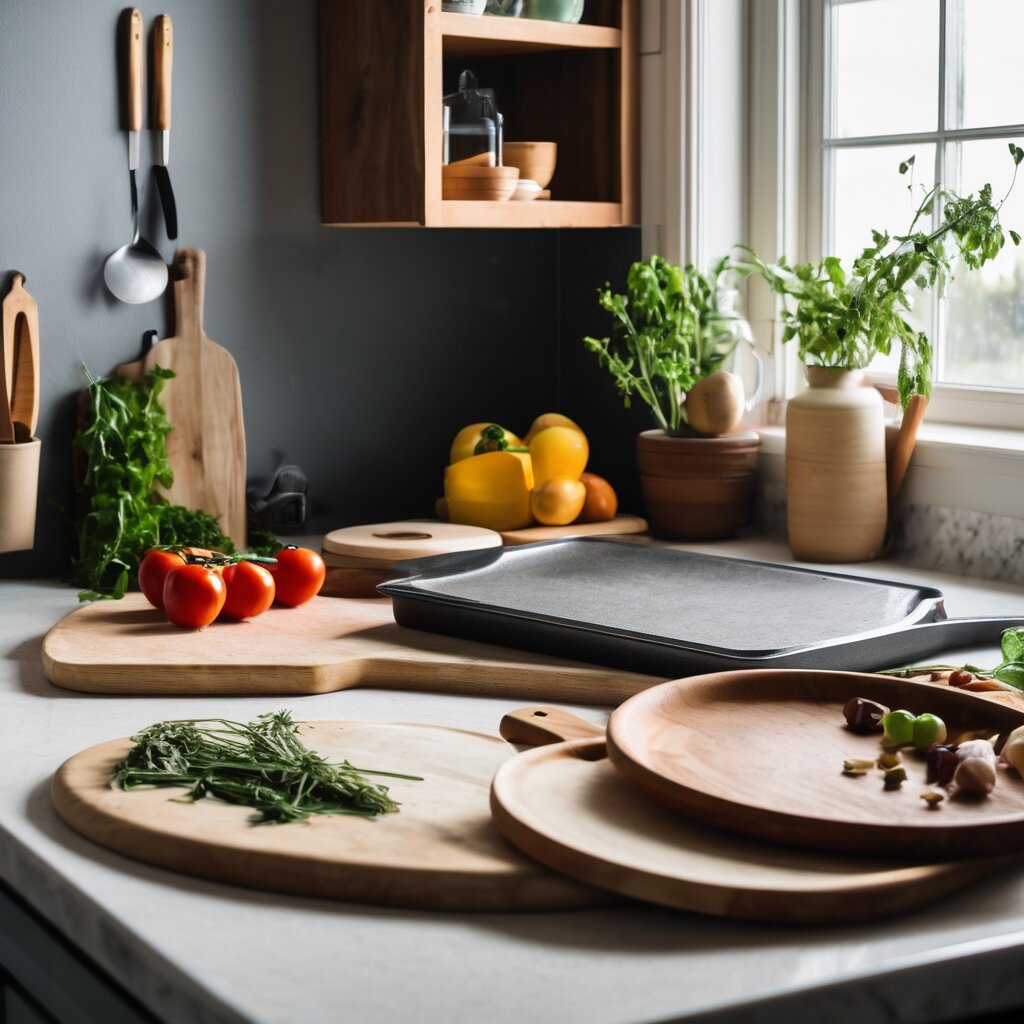
- Use the right surface for the task. A solid cutting board that doesn't slide or splinter, a workspace at the right height, and proper lighting are foundational to working quickly and safely.
- Match the pan to what you're cooking. A heavy-bottomed pan for searing and sustained heat, a lighter pan for quick cooking, and the right surface temperature for what the food needs.
- Keep tools in good repair. Sharp knives, clean pans, boards that are still flat and stable—these are prerequisites for good cooking. Equipment that is maintained works; equipment that is neglected fails.
- Organize your workspace so frequently used tools are within arm's reach of where you use them. Knives near the cutting board, pans near the stove, storage containers where you actually keep food.
A kitchen set up for use